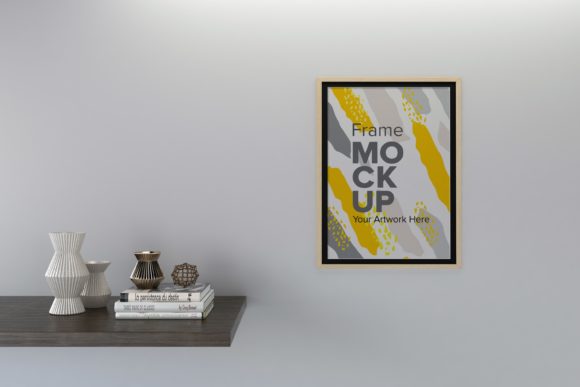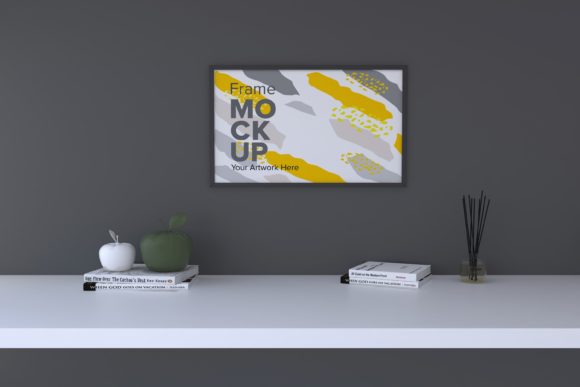
Frame Mockup with Decorative Items
Imagine you have just finished designing a stunning poster, a new logo concept, or a series of digital prints. You are ready to show it off, but displaying it on a plain white background feels flat and uninspiring. It lacks context. This is where a Frame Mockup with Decorative Items transforms your work from a simple file into a tangible reality. By placing your design within a frame that sits alongside books, plants, or other stylish accessories on a shelf, you create a scene that tells a story about your brand.
This type of mockup is not just a visual trick; it is a strategic tool for branding. Whether you are an artist looking to sell your work, a blogger wanting to showcase a featured post, or a small business owner advertising a new product, the right presentation can make all the difference. The specific combination of frames with decorative items and books on a shelf offers a cozy, lived-in aesthetic that resonates deeply with audiences. It suggests that your creation belongs in a home or a professional office, adding an immediate layer of credibility and warmth to your designs.
Why Context Matters for Your Designs
In the digital age, attention spans are short. When potential clients scroll through social media feeds or browse online portfolios, they are often overwhelmed by generic images. A photo of a frame hanging on a blank wall is functional, but it is forgettable. In contrast, a Frame Mockup with Decorative Items creates an environment. It provides scale, lighting, and texture that help viewers visualize how the artwork would look in their own space.
Think about the last time you saw a design you loved. Did you immediately imagine it above your sofa? Or did you wonder if it was too big, too small, or just out of place? By using a mockup that includes books and decor, you answer those questions before they are even asked. The surrounding elements act as visual anchors, proving that your design fits seamlessly into a curated lifestyle. This psychological cue is powerful because it moves the viewer from passive observation to active imagination.
Real-World Scenarios for Creators and Businesses
The versatility of this asset extends far beyond simple decoration. Different professionals can leverage these mockups to solve specific challenges in their daily workflows. Let's look at how various users might apply this tool in real situations.
For Artists and Printers
If you sell limited edition prints or custom posters, you need to convince buyers that your art will look good in their living room. Instead of sending a raw JPEG, you can present your piece inside a wooden frame, resting on a bookshelf filled with coffee table books and a small potted plant. This scenario suggests sophistication and quality. It helps the buyer visualize the final product, reducing hesitation and increasing the likelihood of a purchase.
For Bloggers and Content Creators
Blogging is a visual medium. When writing a review of a new interior design trend or showcasing a personal project, standard screenshots often fail to capture the vibe. Using a Frame Mockup with Decorative Items allows you to embed your blog content directly into a styled image. For instance, if you write about "Minimalist Home Office Ideas," you can display your infographic or checklist inside a frame on a desk surrounded by relevant props. This makes your content feel more integrated and less like an advertisement.
For Marketing Agencies and Freelancers
Pitching a rebranding project to a client requires confidence. Presenting a logo on a white slide is boring. However, showing that same logo framed and displayed in a chic, decorated office setting demonstrates its versatility. It shows the client that the design works in the real world. You can easily swap the frame content to match different brand identities while keeping the high-quality background consistent. This saves hours of Photoshop work trying to build a realistic scene from scratch.
For Interior Designers and Realtors
When staging a home virtually or presenting a design plan, showing empty walls is a missed opportunity. These mockups allow designers to populate a room with their proposed artwork instantly. The presence of books and decorative items adds depth to the room, making the space feel complete and inviting. It helps clients understand the scale of the furniture relative to the art and the overall ambiance of the room.
How to Get the Most Out of This Tool
Using a Frame Mockup with Decorative Items is designed to be straightforward, but understanding the workflow ensures you get the best results. The process typically involves opening the provided PSD file in Adobe Photoshop. Inside, you will find Smart Objects layers. These are the magic keys to efficiency. Instead of manually resizing, warping, or adjusting lighting to fit your image into the frame, you simply double-click the Smart Object layer.
This opens a separate window where you can paste your artwork. Once you save that file, your design automatically snaps into the perspective of the frame, complete with shadows, highlights, and texture overlays. This feature alone saves significant time compared to manual editing. You do not need to be a graphic design expert to achieve a professional look. The high resolution of the files, such as dimensions reaching 5000 x 3333 pixels, ensures that your final output is crisp enough for large-format printing or high-definition web displays.
Considerations Before You Start
While these mockups are incredibly useful, there are a few practical things to keep in mind to ensure success. First, consider the aspect ratio of your artwork. If your design is a tall, vertical portrait, it might look awkward in a wide landscape frame unless you add padding or use a matting effect. Always check the composition of your source image before dropping it into the Smart Object.
Second, think about color harmony. The mockup comes with a specific palette of colors in the background—the wood tones of the frame, the colors of the books, and the lighting. Ensure that the colors in your design complement rather than clash with these elements. If your artwork is very bright neon, it might stand out too harshly against a muted, cozy background. Conversely, a dark, moody design might get lost in a brightly lit scene. Adjusting the brightness or contrast of your artwork slightly before importing it can help it blend naturally.
Finally, remember that consistency is key for branding. If you are creating a series of posts for social media, try to use the same mockup setup across multiple images. This creates a cohesive feed that looks professional and organized. You can change the frame content, the text overlay, or the specific artwork, but keeping the background scene identical builds recognition among your followers.
Long-Term Value and Reusability
One of the most compelling reasons to invest in high-quality mockups is the long-term return on investment. Creating a realistic scene from scratch requires sourcing photos of shelves, arranging physical objects, taking photos under perfect lighting, and then spending hours editing them in software. With a pre-made Frame Mockup with Decorative Items, you bypass all of that labor. You pay once, download the files, and you have a library of assets ready to use whenever you launch a new campaign.
This approach also saves money over time. Instead of hiring a photographer to set up a shoot every time you have a new design, you can generate unlimited variations yourself. The included JPEGs provide a quick preview option, while the PSD files offer full customization for detailed projects. Whether you are updating your website, launching a new product line, or refreshing your social media profile, having these resources on hand means you are always ready to present your work in the best possible light.
Ultimately, the goal is to elevate your brand perception. A well-presented design signals professionalism and attention to detail. By using a scene that includes decorative items and books, you connect with your audience on a human level, suggesting that your work is part of a larger, thoughtful lifestyle. It is a simple shift in presentation that can lead to significant improvements in engagement, sales, and brand loyalty.