Unlocking the Beauty of Decorative Islamic Border Templates for Modern Design
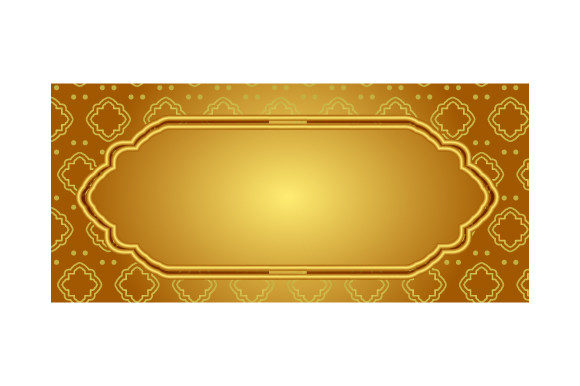
In an era where digital aesthetics play a pivotal role in communication, finding the right visual elements can make the difference between a mundane presentation and a masterpiece. One of the most enduring and elegant design resources available to creators is the Decorative Islamic border template. These intricate patterns are not merely ornamental; they represent centuries of artistic heritage, mathematical precision, and spiritual symbolism. Whether you are designing a wedding invitation, a corporate brochure, or a digital background, incorporating these timeless designs adds a layer of sophistication that few other motifs can match.
This guide explores the profound significance of Islamic border art, how it integrates into contemporary workflows, and why having access to versatile file formats like AI, EPS, JPG, and PNG is essential for any designer's toolkit.
The Artistic Heritage of Islamic Geometric Patterns
To truly appreciate a decorative Islamic border template, one must first understand its roots. Islamic art has a rich history spanning over 1,400 years, characterized by a unique avoidance of figurative imagery in religious contexts. Instead, artists turned to geometry, calligraphy, and vegetal motifs (arabesques) to express the infinite nature of creation. The border, often referred to as the "frame" of a composition, serves as a boundary that separates the sacred from the profane, or the content from the surrounding space.
These borders are built on complex geometric grids. They rely on the repetition of shapes—stars, polygons, and interlacing lines—to create a sense of endlessness. This visual continuity symbolizes the unity and infinity of the divine. For modern designers, this translates into a pattern that feels balanced, harmonious, and mathematically perfect. Unlike random floral arrangements, an Islamic border offers a structured elegance that commands attention without overwhelming the viewer.
Why Choose Islamic Borders for Your Projects?
The appeal of these templates goes beyond their cultural depth; they offer practical advantages in design:
- Visual Balance: The symmetry inherent in Islamic geometry naturally guides the eye toward the center of the page, making it ideal for framing text or important images.
- Cultural Sensitivity: In projects targeting Middle Eastern audiences or dealing with themes of spirituality, tradition, or global diversity, these borders demonstrate respect and authenticity.
- Versatility: From bold, thick frames suitable for posters to delicate, fine-line borders for letterheads, the style adapts to various scales and mediums.
Bridging Tradition and Technology: File Formats Explained
When you acquire a set of decorative Islamic border templates, the value lies not just in the image itself, but in the flexibility of the files provided. A high-quality design package typically includes four distinct formats: AI, EPS, JPG, and PNG. Each serves a specific purpose in the modern design workflow, ensuring that the artwork remains crisp and usable across different platforms.
Vector Power: AI and EPS Files
The AI (Adobe Illustrator) and EPS (Encapsulated PostScript) files are the gold standard for professional graphic design. These are vector-based formats, meaning they are composed of mathematical paths rather than pixels. This distinction is crucial for several reasons:
- Scalability: You can resize an Islamic border from a tiny business card to a massive billboard without losing a single pixel of clarity. The intricate details of the geometric lattice remain sharp regardless of the output size.
- Editability: With AI and EPS files, you have full control. You can change the color of the lines to match your brand palette, adjust the thickness of the strokes, or even modify the pattern density if your software supports it.
- Print Quality: Professional printing presses require vector data to ensure the highest resolution. Using these formats guarantees that your final product will be flawless.
Raster Ready: JPG and PNG Files
While vectors are essential for print and editing, JPG and PNG files are indispensable for digital use. These are raster formats, made up of pixels, and they excel in web environments and quick-sharing scenarios.
- PNG (Portable Network Graphics): This format supports transparency. If you need to place an Islamic border over a colorful photograph or a gradient background without a white box around it, a transparent PNG is your best option. It preserves the integrity of the design while allowing it to blend seamlessly with your content.
- JPG (Joint Photographic Experts Group): Known for its compression efficiency, JPGs are perfect for email attachments, social media posts, and websites where file size matters. They render the intricate details of the border effectively for screen viewing.
Practical Applications in Modern Life and Business
The utility of decorative Islamic border templates extends far beyond traditional craft. In today's fast-paced digital landscape, these designs are being repurposed for a wide array of applications that bridge the gap between heritage and innovation.
Event Planning and Stationery
One of the most common uses is in event design. Weddings, particularly those celebrating Muslim culture, often utilize these borders to frame invitations, menus, and seating charts. The intricate patterns evoke a sense of celebration and solemnity appropriate for such occasions. However, their use is not limited to cultural events; many couples choose these borders simply because they find the aesthetic sophisticated and unique compared to standard floral or lace designs.
Branding and Corporate Identity
Businesses looking to differentiate themselves often turn to unique design elements. A law firm, a consulting agency, or a cultural organization might incorporate a subtle Islamic border into their letterhead or website footer. This signals a commitment to quality, precision, and perhaps a connection to diverse markets. When used correctly, it adds a touch of luxury and exclusivity to corporate branding.
Educational and Digital Content
In the realm of education, teachers and content creators use these borders to structure lesson plans, certificates, and educational materials. For example, a certificate of achievement for a student learning Arabic or Islamic studies could feature a custom border that reinforces the subject matter visually. Similarly, bloggers and YouTubers use PNG versions of these borders to create thumbnails or overlays that stand out in a crowded digital feed.
Clarifying Common Misconceptions
As with any cultural art form, there are sometimes misunderstandings regarding the use of Islamic designs. A common assumption is that these patterns are exclusively religious and cannot be used in secular contexts. While they hold deep spiritual significance, Islamic art is also a universal language of beauty. Just as Greek columns are used in government buildings worldwide without implying a worship of Zeus, Islamic borders are widely accepted in secular design for their aesthetic value.
Another misconception is that these designs are too complex to adapt to modern minimalism. On the contrary, the principles of Islamic geometry align perfectly with modern minimalist trends. By isolating a small section of a larger pattern or using negative space effectively, designers can create a "less is more" look that retains the elegance of the original motif. The key is adaptation, not rigid adherence to historical replication.
Maximizing Creativity with Template Resources
To get the most out of your decorative Islamic border template collection, consider experimenting with layering and texture. Don't limit yourself to flat colors. Try overlaying a semi-transparent version of the border on top of a textured paper background in Photoshop. Or, combine a vector AI border with a watercolor wash to create a soft, organic feel.
Furthermore, remember that these templates are tools for inspiration. Use them as a starting point. If you have access to the AI or EPS files, try breaking the symmetry or altering the rhythm of the pattern to create something entirely new. This process of deconstruction and reconstruction is where true creativity flourishes.
Conclusion
The decorative Islamic border template is more than just a design element; it is a bridge connecting the past with the present. It offers a solution for designers seeking depth, meaning, and visual excellence in their work. Whether you are utilizing the editability of AI and EPS files for print production or the transparency of PNG files for web graphics, these assets provide the foundation for stunning visual storytelling.
By understanding the history, respecting the artistry, and leveraging the technical versatility of these templates, anyone can elevate their projects. From the grand halls of architecture to the small screens of smartphones, the beauty of Islamic borders continues to inspire, decorate, and captivate. Embrace this timeless resource and let it add a touch of eternal elegance to your creative endeavors.