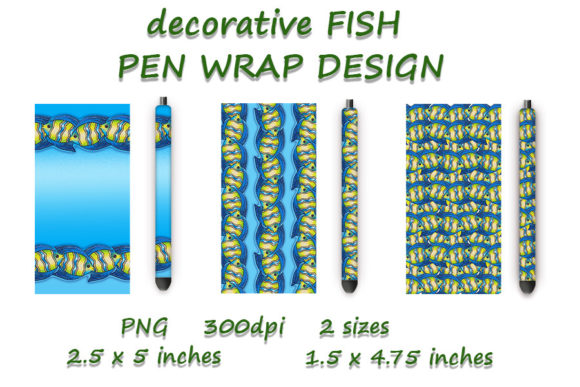
Decorative FISH Pen Wrap Design.v21: Elevating Your Custom Pen Projects
If you are looking to add a splash of aquatic charm to your stationery or gift items, the Decorative FISH Pen Wrap Design.v21 offers a sophisticated solution for crafters and entrepreneurs alike. This digital bundle is not merely a collection of images; it is a toolkit designed to transform plain writing instruments into personalized masterpieces. By incorporating these designs into sublimation or waterslide projects, you can create unique products that stand out in a crowded marketplace. However, achieving a professional finish requires more than just downloading a file and hitting print. It demands an understanding of dimensions, resolution, and application techniques to ensure your final product looks as good as the digital preview.
The core value of this design set lies in its versatility and high-quality preparation. The bundle includes three distinct epoxy pen wrap designs, catering to different aesthetic preferences while maintaining a cohesive theme. Whether you are a small business owner creating custom gifts for clients or a hobbyist making presents for family, having access to ready-to-use graphics saves hours of design time. More importantly, these files are optimized for immediate use, allowing you to focus on the creative assembly rather than troubleshooting image quality issues.
Understanding Dimensions and Resolution Matters
One of the most frequent errors made when purchasing digital wrap designs is overlooking the specific pixel dimensions required for your equipment. The Decorative FISH Pen Wrap Design.v21 bundle explicitly provides two of the most popular sizes: 1.5 x 4.75 inches at 750x1500 pixels and 2.5 x 5 inches at 450x1425 pixels. While these measurements cover the majority of standard pens, assuming they will fit every single model without adjustment can lead to frustration.
Misalignment and Stretching: If you attempt to force a design meant for a 2.5-inch diameter onto a 1.5-inch tube, the image will stretch horizontally, distorting the fish patterns and ruining the visual appeal. Conversely, applying a large design to a smaller surface without proper cropping may result in critical details being cut off or wrapped awkwardly around the seam. To avoid this, always measure your specific pen blanks before printing. Ensure your printer software is set to scale the image exactly to the intended physical size rather than "fit to page."
Furthermore, the resolution of 300dpi is crucial for crisp edges. Lower resolutions often result in pixelation, especially when the design is viewed up close. Since these files are provided as high-quality PNGs, they retain transparency and sharpness, but only if you do not accidentally resize them down significantly in an image editor before printing. Always work with the original file size to maintain the integrity of the vector-like quality within the raster format.
Selecting the Right Application Method
Another area where beginners often stumble is confusing the application methods for different types of wraps. The product description mentions both Sublimation Epoxy Pen Wraps and Waterslide Pen Backgrounds. While the digital file is the same, the physical process differs significantly depending on which method you choose.
- Sublimation: This method requires heat transfer paper and a heat press. The ink turns into a gas and bonds with the polymer coating of the pen. If you use sublimation paper with a waterslide decal technique, the results will be poor because the paper does not release properly without heat.
- Waterslide Decals: This involves printing the design onto special decal paper, soaking it in water, and sliding the film onto the pen. This is ideal for pens without a polymer coating or for those who prefer a manual application process.
Failing to match your material to the intended technique can waste money on specialty papers that don't adhere correctly. Before starting, verify whether your pen blanks have a sublimation-ready coating. If they are bare plastic or wood, you must use the waterslide method or apply a primer first. Using the wrong approach leads to peeling, fading, or complete detachment of the design after a short period.
Avoiding Common Mistakes in File Management
Even with perfect files, user error during the download and editing phase can degrade the final output. A common pitfall is saving the high-resolution PNG files in formats that compress quality, such as JPEG, or converting them to RGB mode when CMYK is required for certain printers. While the Decorative FISH Pen Wrap Design.v21 files are ready for use, always check your color profile settings.
Color Accuracy: Digital screens display colors in RGB (Red, Green, Blue), while printers use CMYK (Cyan, Magenta, Yellow, Black). Colors that look vibrant on your monitor may appear slightly duller on the printed wrap. To mitigate this, calibrate your monitor and perform a test print on regular paper before committing to expensive sublimation or decal paper. This simple step prevents costly mistakes where the final product does not match the customer's expectation.
Additionally, be cautious about resizing. While the files are described as easy to resize, scaling a 750-pixel width down to 300 pixels for a very small pen might make the fine details of the fish scales invisible. It is better to stick to the provided dimensions or use a design tool that allows for precise cropping without losing the aspect ratio. If you need a different size, consider contacting the creator for a custom version rather than stretching the existing one.
Evaluating Quality Before You Buy
When evaluating digital assets like this bundle, look beyond the preview image. Check the file specifications carefully. High-quality PNGs should have transparent backgrounds, allowing you to layer the fish design over other elements or place it directly on colored pens without white boxes. The Decorative FISH Pen Wrap Design.v21 bundle promises this feature, ensuring seamless integration into your workflow.
For entrepreneurs, the efficiency of these files translates directly to profit margins. Ready-to-print designs reduce the time spent on graphic design, allowing you to focus on marketing and sales. However, remember that the design is only half the equation. The quality of the pen blank, the precision of your cutting tools, and the care taken during the heating or soaking process determine the durability of the final item. A beautiful design applied poorly will still result in a return or a dissatisfied customer.
In conclusion, the Decorative FISH Pen Wrap Design.v21 is a valuable resource for anyone looking to enhance their pen customization projects. By respecting the specific dimensions, choosing the correct application method, and managing your files with care, you can avoid common pitfalls and produce professional-grade results. Take the time to understand the properties of the materials you are working with, and let these high-quality designs serve as the foundation for your creativity. With the right approach, these epoxy-style wraps can become a signature element of your brand or a cherished personal project.